

If you’ve ever been told at your child’s checkup that they need a fluoride treatment, you’ve probably wondered what it actually involves. Fluoride treatment is a quick, professional procedure where a dentist applies a concentrated form of fluoride directly to the teeth to strengthen enamel and reduce the risk of cavities. Pediatric dentists recommend it routinely throughout childhood and adolescence. This guide covers exactly what the treatment involves, its proven benefits, what side effects to realistically expect, and which kids stand to benefit most.
What Is Fluoride Treatment?
Fluoride is a naturally occurring mineral found in water, soil, and certain foods. When it comes into contact with tooth enamel, it gets absorbed into the enamel’s crystalline structure, making teeth more resistant to acid erosion. Professional fluoride treatment refers specifically to the application of a high-concentration fluoride product by a dental provider, which goes well beyond what daily toothpaste can deliver.
How Fluoride Protects Your Teeth
Tooth decay begins when bacteria in the mouth feed on sugars and produce acid. That acid gradually dissolves the minerals in enamel, weakening it over time. Fluoride works against this process in three key ways:
- Remineralization: It attracts calcium and phosphate ions back into weakened enamel, helping repair early-stage decay before it becomes a cavity.
- Strengthening enamel: Fluoride forms a harder compound within the enamel called fluorapatite, which is more resistant to acid than natural enamel.
- Bacterial suppression: At higher concentrations, fluoride can inhibit the enzymes that cavity-causing bacteria use to produce acid in the first place.
Professional Fluoride vs. At-Home Fluoride
Fluoride toothpaste and over-the-counter mouth rinses typically contain fluoride concentrations in the range of 1,000 to 1,500 parts per million. Professional fluoride treatments are formulated at 22,600 ppm or higher. This means that even if your child brushes diligently twice a day, a professional application gives their enamel a level of protection that at-home products simply cannot replicate. The contact time and concentration together produce results that last months, not hours.
What Happens During a Fluoride Treatment?
Most parents are surprised by how brief the whole process is. From start to finish, a fluoride treatment typically takes under five minutes and involves no discomfort.
The Fluoride Application Process
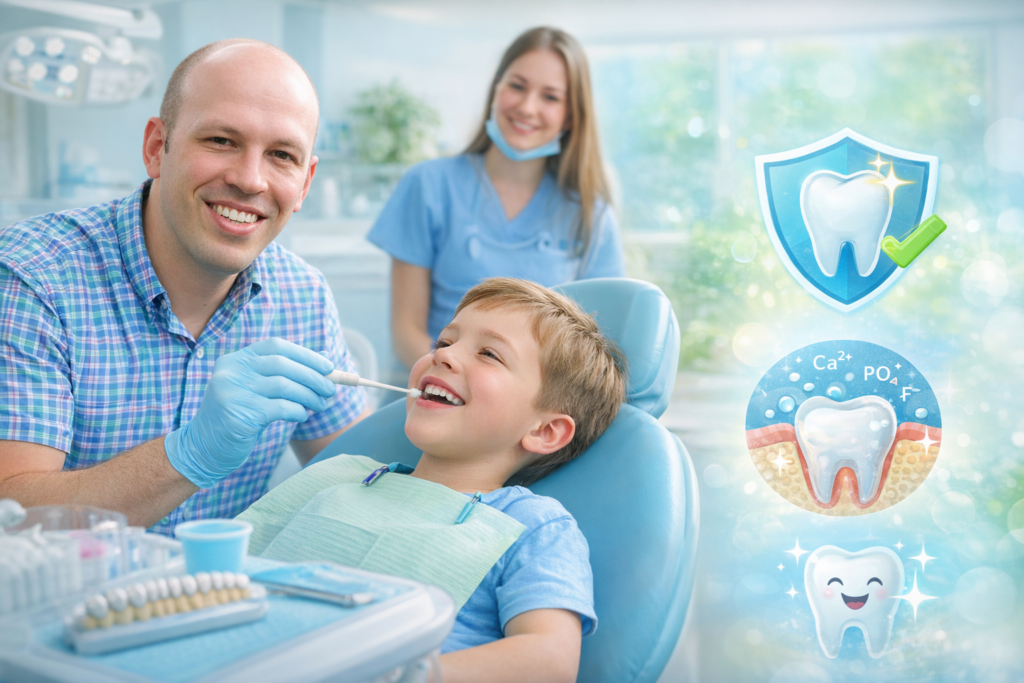
First, the teeth are cleaned and dried. This step matters because fluoride bonds more effectively to a clean, dry surface. The pediatric dentist or hygienist then applies the fluoride product directly to all tooth surfaces. After a brief contact period, your child will be asked to avoid eating or drinking for about 30 minutes so the fluoride has time to absorb fully into the enamel.
Types of Professional Fluoride Treatments
Fluoride varnish is the most commonly used form today, especially for younger children. It’s painted onto the teeth with a small brush and has a sticky consistency that keeps it in contact with enamel for several hours. It hardens quickly when it meets saliva, so there’s no risk of swallowing significant amounts.
Fluoride gel is applied using a tray that fits over the teeth and is held in place for about one to four minutes. It’s effective and widely used, particularly for older kids and teens.
Fluoride foam works similarly to gel and is also delivered via tray. It uses a lower fluoride volume while still achieving adequate coverage, making it a practical option in many pediatric settings.
What to Do After Fluoride Treatment
- Wait at least 30 minutes before eating or drinking anything
- Avoid hard, crunchy, or sticky foods for the rest of the day if a varnish was applied
- Continue brushing and flossing normally starting the next morning
- If your child’s dentist recommends a prescription fluoride toothpaste at home, use it as directed
Benefits of Fluoride Treatment
Helps Prevent Cavities
This is the core reason fluoride treatment exists. Studies consistently show that professional fluoride applications reduce cavity rates in children by between 18 and 40 percent, depending on baseline risk. For kids in Collinsville and the surrounding communities of Maryville, Troy, and Glen Carbon who are consuming sugary snacks and sports drinks regularly, that reduction is clinically significant.
Reverses Early Tooth Decay
Cavities don’t start as holes. They begin as white spot lesions, areas where minerals have leached out of enamel. Professional fluoride at this stage can actually reverse the process by flooding the enamel with the minerals it lost. This is one of the most underappreciated benefits of consistent preventive care.
Protects Teeth from Acid Damage
Every time your child eats fruit, drinks juice, or has a snack, the pH in their mouth drops and acid goes to work on enamel. Fluoride-treated enamel withstands these acid attacks far better than untreated enamel, giving teeth a meaningful buffer against the everyday diet of a growing kid.
Safe and Effective for Children
Because children’s teeth are still developing and maturing well into adolescence, fluoride has a particularly strong protective effect during these years. Primary teeth benefit just as much as permanent teeth, and protecting baby teeth matters because they hold space and guide the eruption of permanent ones.
Supports Long-Term Oral Health
Preventing a cavity is always less expensive, less time-consuming, and less uncomfortable than treating one. A fluoride treatment that costs a small amount today can prevent a filling, crown, or even an extraction down the road. Over a childhood, consistent preventive care adds up to real savings and a genuinely healthier smile into adulthood.
Are There Any Side Effects of Fluoride Treatment?
Fluoride treatment has a strong safety record when administered by a licensed pediatric dental professional. That said, it’s worth understanding the potential side effects so you can make an informed decision for your child.
Mild Tooth Discoloration (Fluorosis)
Dental fluorosis refers to faint white streaks or spots that can appear on teeth when children are exposed to excessive fluoride during the years when their permanent teeth are forming, roughly ages one through eight. It is almost exclusively a cosmetic issue and does not affect the health or strength of the teeth. Fluorosis from professional treatments alone is extremely rare. It is more commonly associated with children swallowing large amounts of fluoride toothpaste over a prolonged period.
Temporary Tooth Sensitivity
Some children report mild sensitivity after a fluoride treatment, particularly those who already have sensitive teeth. This is uncommon and typically resolves within a day or two.
Fluoride Toxicity
True fluoride toxicity requires ingesting a very large quantity of fluoride in a very short period. The amount used in a professional pediatric dental treatment is far below any threshold associated with systemic effects. The varnish form used most commonly with young children is specifically designed to minimize any risk of ingestion.
Who Should Get Fluoride Treatments?
Children and Teens
Pediatric dentists universally recommend fluoride treatments for children because developing teeth absorb fluoride more readily and benefit most from its protective effects. Most children should receive a professional treatment at every routine checkup, typically every six months, starting when the first teeth come in.
Children with Higher Cavity Risk
Some kids face a greater risk of decay due to specific factors, including:
- A history of frequent cavities
- Dry mouth related to medications or health conditions
- A diet consistently high in sugar or acidic drinks
- Deep grooves or pits in the chewing surfaces of their molars
- Difficulty maintaining thorough oral hygiene habits
For these children, more frequent fluoride treatments, sometimes every three months, can make a meaningful difference in cavity prevention.
Kids with Braces or Dental Appliances
Orthodontic brackets, wires, and other dental hardware create hard-to-clean areas where plaque accumulates quickly. Children currently in braces benefit significantly from fluoride treatments throughout their orthodontic treatment to protect enamel around brackets and along the gumline.
How Often Should Your Child Get Fluoride Treatment?
For most children, the standard recommendation is every three to six months, aligned with regular checkup visits. The exact interval depends on individual cavity risk, oral hygiene habits, diet, and whether the child has a history of decay.
Our pediatric dentist in Collinsville, IL will evaluate these factors and adjust the recommendation accordingly rather than applying a one-size-fits-all schedule. As kids grow and their risk factors change, the frequency may shift as well.
Is Fluoride Treatment Safe?
Fluoride treatment has been a standard component of pediatric preventive dental care for decades. It is endorsed by the American Dental Association, the American Academy of Pediatrics, the World Health Organization, and the Centers for Disease Control and Prevention. Community water fluoridation, in practice in the United States since 1945, is consistently cited as one of the ten greatest public health achievements of the 20th century. Professional fluoride treatments apply this same well-studied mineral in a controlled, precise way under the supervision of a licensed provider.
Helping Kids Build Healthy Smiles Across the Metro East and Greater St. Louis
Preventive dentistry is the foundation of a lifetime of good oral health, and fluoride treatment is one of its most reliable tools. For families throughout Collinsville, Maryville, Fairview Heights, Swansea, and the wider Metro East area, as well as communities in Ballwin, Chesterfield, Manchester, and St. Peters, building consistent preventive habits early makes a real difference over the years ahead.
At Gateway Little Smiles, caring for the kids in this community is at the heart of everything we do. We believe every child deserves access to affordable, comprehensive pediatric dentistry that genuinely improves their oral health, not just cleans their teeth twice a year.
Our dedicated team uses the “Tell, Show, Do” technique to make every visit positive, educational, and something kids actually look forward to. By explaining what we’re doing, showing your child each tool and step, and then gently proceeding, we spark curiosity, encourage participation, and turn what could be an anxious experience into a meaningful one. It’s an approach that builds trust visit after visit, and it’s why so many Metro East and Greater St. Louis families have made us their pediatric dental home for years.
Whether your child is due for a routine checkup, a first visit, or a fluoride treatment before the school year, our team is ready to welcome them at any of our three convenient locations:
Gateway Little Smiles: Pediatric Dentist in Collinsville, IL
Gateway Little Smiles: Pediatric Dentist in St. Peters, MO
Frequently Asked Questions About Fluoride Treatment
How long after fluoride treatment can my child eat?
The standard recommendation is to wait about 30 minutes before eating or drinking. If a varnish was applied, your child’s dentist may suggest avoiding sticky or hard foods for the remainder of the day.
Is fluoride treatment worth it for kids?
For most children, yes. The evidence base for fluoride’s ability to reduce cavities is among the strongest in all of preventive dentistry. When weighed against the cost and discomfort of treating cavities, the value is clear.
Does dental insurance cover fluoride treatment?
Most dental insurance plans cover fluoride treatments for children as part of routine preventive care. Coverage details vary by plan, so it’s worth calling your insurance provider before your child’s appointment if cost is a concern.
At what age should children start getting fluoride treatments?
Most pediatric dentists recommend starting fluoride treatments as soon as a child’s first teeth erupt, typically around six months to one year of age. Early protection matters because even primary teeth are vulnerable to decay.