

It can be confusing when your child brushes regularly but still has noticeable bad breath. You may wonder whether they are missing part of their mouth while brushing, whether food is stuck somewhere, or whether something else is contributing.
Brushing is an important part of children’s oral hygiene, but it does not address every possible source of breath odor.
The tongue, areas between the teeth, plaque, gum irritation, saliva, breathing habits, foods, temporary illness, and other factors may all influence how a child’s breath smells.
Persistent bad breath also does not automatically mean your child is brushing poorly or that something serious is wrong.
Instead of placing blame on brushing, it is more helpful to look at the pattern, consider other possible contributors, and have your child’s mouth evaluated when the odor keeps returning.
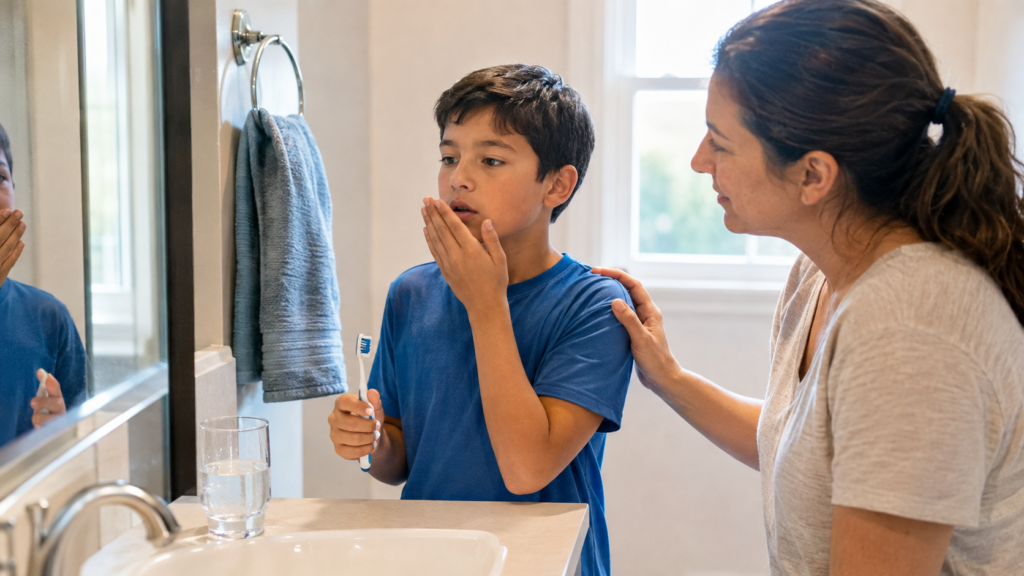
Why Can Bad Breath Continue After Brushing?
A toothbrush cleans many tooth surfaces, but the mouth contains more than teeth.
Odor-producing material can collect on the tongue or between teeth. Plaque may remain in places that are difficult for a child to reach. Saliva levels and breathing habits may also affect the oral environment.
Some temporary changes in breath can occur after certain foods, upon waking, or during an illness.
The more useful question is whether the odor is occasional or whether it continues despite a consistent oral-hygiene routine.
When bad breath keeps returning, taking a closer look can help identify whether something in the mouth may be contributing.
What Oral Factors Can Cause Bad Breath in Children?
Several areas of the mouth can affect breath even when a child brushes consistently.
Tongue Buildup
The tongue can collect bacteria, food particles, and other material that may contribute to odor.
Depending on your child’s age and abilities, gentle tongue cleaning may be a useful addition to daily hygiene.
There is no need for aggressive scraping. The goal should be comfortable, age-appropriate cleaning.
If you are unsure what technique is appropriate, ask your child’s dental team.
Food Between the Teeth
A toothbrush does not always reach the spaces between teeth.
Food debris can sometimes remain in these areas, particularly as children’s teeth begin contacting one another more closely.
Cleaning between teeth may therefore become an important part of oral hygiene when appropriate for your child’s age and dental development.
Plaque and Gum Irritation
Plaque that remains around the teeth and gumline can contribute to odor and may irritate the gums.
Children are still learning how to clean effectively, so needing parental guidance or supervision is normal.
Gateway Little Smiles provides pediatric dental cleanings as part of preventive pediatric care. Professional care can address buildup while also helping families identify areas that may need more attention at home.
A cleaning, however, should not be viewed as a guaranteed solution for bad breath because odor can have other causes.
Dental Concerns
Tooth decay or another dental problem can sometimes contribute to persistent odor.
That does not mean bad breath automatically indicates a cavity.
Rather than trying to identify the cause at home, a pediatric dental evaluation can help determine whether a tooth, the gums, or another oral factor may be involved.
Can Dry Mouth or Mouth Breathing Affect Breath?
Saliva helps naturally cleanse the mouth.
When the mouth becomes dry, breath odor may sometimes become more noticeable. Not drinking enough fluids can be one possible contributor.
Frequent mouth breathing may also create a drier oral environment.
However, bad breath alone cannot tell you why a child is breathing through the mouth.
If you notice regular mouth breathing during the day or while your child sleeps, mention the pattern to the dental team and, when appropriate, another healthcare professional. The goal is to recognize the pattern without trying to diagnose its cause yourself.
Could the Cause Be Outside the Mouth?
Yes. Not every case of bad breath begins with the teeth or gums.
Certain foods, temporary illness, nasal or sinus concerns, and other health-related factors may sometimes affect breath odor.
That is why better brushing or a professional dental cleaning will not necessarily resolve every case of persistent bad breath.
If the odor continues along with persistent mouth breathing, nasal symptoms, illness, or another concern outside the mouth, discuss what you are noticing with your child’s pediatrician or another appropriate healthcare professional.
A pediatric dentist can assess possible oral contributors, while other healthcare professionals can evaluate concerns outside the scope of dentistry.
When Should Parents Have a Child Evaluated?
Occasional bad breath is not necessarily a cause for concern.
Consider having your child evaluated when the odor:
- Continues despite regular oral hygiene
- Keeps returning
- Occurs with tooth pain
- Is accompanied by swollen or bleeding gums
- Appears with visible changes inside the mouth
- Occurs with unusual sensitivity or discomfort
- Continues to concern you as a parent
An evaluation does not mean the dental team expects to find a serious problem.
It provides an opportunity to look for possible oral contributors and explain what, if anything, needs attention.
What Does a Pediatric Dentist Check?
During a pediatric dental exam, the dental team may look at the child’s teeth, gums, tongue, and other visible areas of the mouth.
They may also ask about:
- Brushing habits
- Cleaning between teeth
- Diet
- Mouth breathing
- Dry mouth
- Recent illness
- When the odor occurs
- Other changes you have noticed
The evaluation should be individualized according to the child’s age, history, symptoms, and clinical findings.
Parents do not need to arrive knowing the cause. Sharing what you have noticed is enough to help start the conversation.
How Can Parents Help at Home?
Parents can support their child’s oral hygiene without making bad breath a source of stress or embarrassment.
Helpful habits may include:
- Brushing consistently with age-appropriate technique
- Helping or supervising when needed
- Cleaning between teeth when recommended
- Gently cleaning the tongue when appropriate
- Encouraging regular water intake
- Following individualized recommendations from the dental team
- Paying attention to when the odor seems most noticeable
Gateway Little Smiles also provides parent education to help families understand age-appropriate oral hygiene and recognize changes worth discussing.
Just as importantly, avoid framing persistent odor as something your child has done wrong.
Children are still learning how to care for their mouths, and even good brushing cannot address every possible contributor to bad breath.
What If My Child Is Nervous About an Evaluation?
Some children may feel uncertain about having a new concern checked.
Gateway Little Smiles uses a Tell, Show, Do approach in which the dental team explains and demonstrates steps in an age-appropriate way before proceeding. This approach is intended to help children understand what is happening and become more familiar with the visit.
Every child responds differently, so the goal is not to promise an anxiety-free experience. It is to provide supportive, individualized care.
Persistent Bad Breath Is a Reason to Look Closer, Not Panic
If your child has bad breath even after brushing, there is no need to immediately assume poor hygiene, cavities, or another specific problem.
Several possible factors may contribute, including tongue buildup, food between teeth, plaque, gum irritation, dry mouth, mouth breathing, dental concerns, and causes outside the mouth.
Pay attention to whether the odor persists, whether other symptoms occur, and whether it continues despite regular oral hygiene.
A pediatric dental evaluation can help determine whether something in the mouth may be contributing and whether further attention is needed.
Gateway Little Smiles focuses exclusively on pediatric dentistry for babies, toddlers, children, and teens, with individualized care designed around each child’s age and needs.
If your child’s bad breath keeps returning and you are unsure why, contact Gateway Little Smiles to schedule an evaluation and discuss what you have noticed.