

As parents in the Greater St. Louis area, we do everything we can to set our children up for success. We look for the best schools, ensure they wear helmets while biking through Castlewood State Park or the Katy Trail, and try to get them to eat their greens. When it comes to their oral health, one of the most effective tools in our preventive toolkit is the dental sealant.
At Gateway Little Smiles, we believe that education is the first step toward a lifetime of healthy habits. Our goal is to ensure every family in the region feels confident and informed about the choices they make for their child’s dental care. As a leading pediatric dentist in Greater St. Louis, we prioritize treatments that stop problems before they start.
What Are Dental Sealants?
A dental sealant is a thin, protective coating that adheres to the chewing surface of your child’s back teeth. Think of it like a raincoat for a tooth. Just as a raincoat keeps water from soaking into your clothes during a sudden St. Louis downpour, a sealant keeps food particles and cavity-causing bacteria from settling into the deep grooves of the molars.
These coatings are primarily used on the back teeth because those are the areas most prone to decay in children and adolescents. While the smooth sides of a tooth are easy to clean with a brush, the chewing surfaces are much more vulnerable.
How Do Dental Sealants Work?
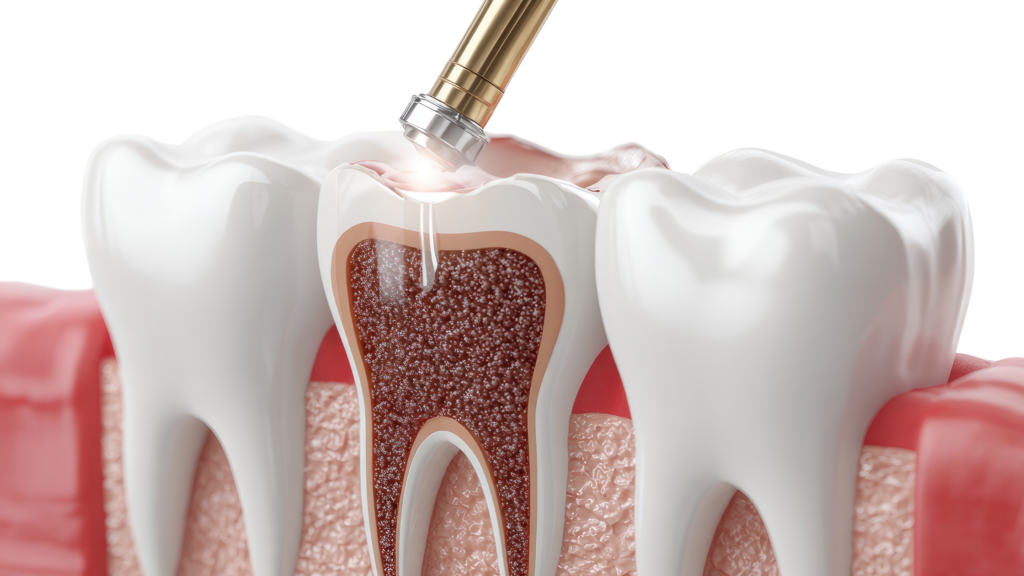
The anatomy of a molar is surprisingly complex. If you look closely at the chewing surface, you will see deep pits and fissures. These grooves are often narrower than a single bristle on a toothbrush, making them nearly impossible to clean thoroughly, even for the most diligent brusher.
- Physical Barrier: The sealant material is applied as a liquid that flows into these deep pits and then hardens, creating a smooth, flat surface.
- Bacteria Blocker: By sealing off these “hiding spots,” we prevent plaque, sugar, and acid from reaching the enamel. This is vital because once bacteria settle into a deep groove, they begin to produce acid that erodes the tooth.
- Long-term Support: This added layer of protection significantly reduces the risk of cavities during the most decay-prone years of childhood. It acts as a shield during the years when brushing habits are still being perfected.
Why Are Dental Sealants Recommended for Kids?
Even with great technique, children often struggle to reach the very back of their mouths. Molars are the workhorses of the mouth, doing most of the grinding and chewing. Because they stay in the mouth for a lifetime, protecting them the moment they emerge is a smart investment in your child’s future health.
By adding this extra layer, we provide a safety net that helps prevent the need for more invasive procedures like fillings or crowns later on. Furthermore, the enamel on newly erupted permanent teeth is not as hard as it will be as they age, making them more susceptible to acid attacks in those early years.
At What Age Should Children Get Dental Sealants?
Timing is everything in pediatric dentistry. We generally recommend sealants as soon as the permanent molars erupt, which ensures they are protected before decay has any chance to begin.
- First Molars: These typically appear around age six. Because these teeth arrive early, they are often mistaken for baby teeth, but they are permanent and need lifelong protection.
- Second Molars: These usually emerge around age twelve, often referred to as the “twelve-year molars.”
At Gateway Little Smiles, we advocate for the “Age One” focus aligned with the American Academy of Pediatric Dentistry. While sealants come later, starting visits early allows us to track the development of your child’s permanent smile and identify the perfect moment for sealant application.
Do Sealants Go on Baby Teeth or Permanent Teeth?
While sealants are most commonly applied to permanent molars, there are instances where we may recommend them for baby teeth. If a child has particularly deep grooves in their primary molars or is at a higher risk for cavities, protecting those teeth is vital.
Baby teeth serve as essential placeholders for permanent teeth; if a baby tooth is lost too early due to decay, it can lead to crowding or alignment issues when the permanent teeth arrive. Keeping them healthy is a priority for proper jaw development and a stress-free transition to an adult smile.
Are Dental Sealants the Same as Fillings?
It is important to distinguish between prevention and restoration. A filling is used to repair a tooth after a cavity has already formed. We must remove the decayed portion of the tooth and replace it with a restorative material.
A sealant, conversely, is purely preventive. It is applied to a healthy, intact tooth to ensure it stays that way. One is a reactive treatment for a problem that already exists, while the other is a proactive shield designed to keep the problem from ever occurring.
How Are Dental Sealants Applied?
At Gateway Little Smiles, we utilize the “Tell, Show, Do” method for this process. This means we explain every tool and step to your child in age-appropriate language, show them how the “tooth paint” or “magic light” works on their finger or a model, and then perform the task. This interactive approach eliminates the fear of the unknown.
Cleaning and Preparing the Tooth
First, we thoroughly clean the tooth to ensure no bacteria or food debris are trapped under the sealant. We then apply a gentle conditioning solution that helps the sealant bond securely to the enamel.
Applying the Sealant Material
The liquid sealant is carefully painted onto the chewing surface. Because it is a liquid initially, it flows into all the tiny nooks and crannies that a toothbrush cannot reach.
Hardening the Sealant
We use a special blue curing light to harden the material. This takes only a few seconds per tooth, turning the liquid into a tough, durable plastic shield.
Checking the Bite
Finally, we ensure the sealant is smooth and does not interfere with how your child’s teeth come together. The entire process is quick, comfortable, and requires no numbing or drilling.
Are Dental Sealants Safe for Kids?
Safety is a top priority for parents. Dental sealants have been used in pediatric offices for decades and are recognized by the American Dental Association as a safe, effective way to prevent tooth decay. The materials used are biocompatible and designed to withstand the significant pressures of daily chewing and grinding.
How Long Do Dental Sealants Last?
Sealants are remarkably durable. They can protect teeth for several years under normal chewing conditions. However, they are not permanent. During regular checkups, we will monitor the condition of the sealants. If one becomes chipped or worn down due to heavy chewing or sticky foods, we can easily repair or replace it during a routine visit to maintain that protective barrier.
What Are the Benefits of Dental Sealants?
- Significant Cavity Reduction: Studies show sealants reduce the risk of decay by nearly 80% in molars.
- Easier Hygiene: A smoother tooth surface is much easier for a child to brush effectively.
- Cost-Effective: Prevention is always more affordable and less stressful than treating a cavity after it develops.
- Comfortable Experience: There is no “scary” part of getting sealants, which helps build a positive association with the dentist that lasts into adulthood.
Can Kids Still Get Cavities With Sealants?
Sealants are a powerful tool, but they are not a substitute for daily care. Your child still needs to brush twice a day and floss between teeth where the sealant cannot reach. Sealants only protect the top chewing surfaces; the spaces between the teeth and the gum line are still vulnerable to plaque.
This is also where we discuss the role of chemistry in oral health. Many parents ask, what is fluoride treatment, and how does it differ? While sealants provide a physical shield on the top of the tooth, fluoride treatment strengthens the enamel itself, making the entire tooth more resistant to acid. Together, they offer comprehensive protection.
Who Is a Good Candidate for Dental Sealants?
Most children can benefit from sealants, particularly those with newly erupted permanent molars. We also find they are an excellent option for our patients with varying physical or developmental abilities.
Because the application is so fast and non-invasive, it is a great preventive step for children who may have sensory sensitivities or difficulty sitting for long periods. Our offices are designed to be sensory-friendly, offering noise-canceling headphones and streaming TVs to make the appointment feel like a fun break rather than a chore.
What Should Parents Expect After Sealants Are Placed?
There is no “down time” after getting sealants. Your child can eat and drink normally immediately after leaving the office. They might notice that the tooth feels slightly “flatter” to their tongue for a day or two, but this sensation disappears quickly as they get used to the smooth surface. There is no sensitivity to hot or cold associated with the procedure.
When to Ask a Pediatric Dentist About Sealants
If you are noticing new teeth peeking through the gums in the back of your child’s mouth, it is the perfect time to start the conversation. These discussions typically happen during routine dental cleanings. Whether you are spending your weekend at the St. Peters Rec-Plex, visiting the Collinsville Sports Complex, or exploring the parks in Ballwin, prioritizing these quick preventive steps can save your child from future dental anxiety.
Frequently Asked Questions
What are dental sealants made of?
They are typically made of a medical-grade resin or glass ionomer. These materials are specifically engineered to be thin enough to flow into grooves but strong enough to withstand the pressure of biting down on crunchy snacks.
Do sealants contain BPA?
While some resins may contain trace amounts of BPA, the American Dental Association and major health organizations have found that the exposure is negligible and far less than what children encounter in daily life (like through food packaging). The health benefits of preventing decay far outweigh any minimal risk.
At what age should children get sealants?
The “sweet spot” is usually between ages 6 and 14. As soon as those first and second molars are fully visible, we want to seal them to prevent any bacteria from taking hold.
Do sealants go on baby teeth?
It is less common but can be very beneficial for children who are highly prone to cavities. Protecting baby teeth ensures they stay in place until the permanent teeth are ready to come in.
Are sealants the same as fillings?
No. Think of a sealant as a shield that prevents a wound, whereas a filling is a bandage that heals one. Sealants are applied to healthy teeth; fillings are for damaged ones.
How long do dental sealants last?
With proper care, they can last up to 9 or 10 years. However, they can be worn down by grinding or very sticky foods like taffy. We check them at every six-month cleaning to ensure they are still intact.
Can my child still get cavities with sealants?
Yes. A sealant only covers the chewing surface. Cavities can still form on the sides of the tooth or between teeth if your child isn’t flossing. Think of it as protecting the most vulnerable part of the tooth, but not the whole thing.
Do sealants hurt?
Not at all! There is no numbing, no shots, and no drilling. It is a very gentle process that feels similar to having your teeth painted.
Will insurance cover dental sealants?
Many dental insurance plans cover sealants as a preventive service for children under a certain age (often 15 or 18). We recommend checking with your provider, but they are generally considered a standard part of pediatric preventive care.
Schedule Your Child’s Preventive Visit Today
Dental sealants are one of the simplest and most effective ways to protect your child’s smile from the start. By choosing a preventive approach, you are helping your child avoid the stress and discomfort of cavities while fostering a positive relationship with dental health.
At Gateway Little Smiles, we provide expert pediatric care with a focus on education and comfort. With three strategically located offices in Ballwin, St. Peters, and Collinsville, we make it easy for busy families across Missouri and Illinois to prioritize their children’s smiles. If your child is due for a checkup, or if those big kid molars are starting to arrive, ask us about sealants at your next visit!