

If you look inside your child’s mouth and suddenly notice what seems like a second row of teeth, it can be surprising. A permanent tooth may begin appearing behind a baby tooth before that baby tooth has fallen out. Parents sometimes hear this eruption pattern called “shark teeth.”
Although it can look unusual, a permanent tooth growing behind a baby tooth does not automatically mean something is wrong.
During the transition from baby teeth to permanent teeth, eruption patterns can vary from child to child. Sometimes the baby tooth simply needs more time to loosen and fall out.
Understanding why this happens, what you can watch for at home, and when to have the area evaluated can make this stage of your child’s dental development easier to navigate.
Why Can a Permanent Tooth Come In Before the Baby Tooth Falls Out?
Normally, as a permanent tooth develops and begins erupting, the root of the baby tooth gradually resorbs, helping the baby tooth become loose and eventually fall out.
Sometimes the permanent tooth follows a slightly different eruption path.
Instead of emerging directly beneath the baby tooth, it may begin coming in behind it. When that happens, the baby tooth may not loosen as quickly as expected.
For a period of time, this can make it look as though your child has two rows of teeth.
What Are “Shark Teeth” in Kids?
“Shark teeth” is an informal term parents sometimes use when permanent teeth erupt behind baby teeth that are still present.
This appearance is often noticed around the lower front teeth as children transition into their permanent dentition.
You might see a new tooth emerging behind a baby tooth that is already loose, or behind one that still seems relatively firm.
The important question is not simply whether two teeth appear in the same area. A pediatric dentist can also consider:
- How loose the baby tooth is
- How much of the permanent tooth has erupted
- The direction of eruption
- The available space
- The position of neighboring teeth
- Your child’s overall stage of dental development
These details help determine whether the area simply needs more time or should be evaluated more closely.
Will the Baby Tooth Fall Out on Its Own?
It may.
If the baby tooth is already loose, it may continue loosening naturally until it falls out.
Once the baby tooth is gone, the permanent tooth has additional space as your child’s mouth continues to develop.
However, every child’s situation is different. Parents should avoid assuming that the permanent tooth will automatically move into a specific or ideal position after the baby tooth falls out.
If the baby tooth remains firmly in place while the permanent tooth continues erupting, having the area evaluated can help determine whether monitoring or treatment is appropriate.
Should I Pull the Baby Tooth at Home?
Parents generally do not need to force a baby tooth out simply because a permanent tooth has appeared behind it.
If the baby tooth is naturally very loose, your child may gently wiggle it as they normally would with a loose tooth.
A tooth that remains firmly attached should not be forced out.
Trying to remove a baby tooth before it is ready can cause unnecessary discomfort and may not address why the permanent tooth is erupting where it is.
If you are unsure whether the tooth is ready to fall out, having a pediatric dentist check the area is a better approach than trying to remove it prematurely.
When Should I Call a Pediatric Dentist?
You do not necessarily need to panic when you first notice a permanent tooth behind a baby tooth.
However, an evaluation may be helpful when:
- The baby tooth remains firmly in place
- The permanent tooth continues erupting without the baby tooth becoming noticeably looser
- Your child experiences discomfort
- Overlapping teeth make brushing or cleaning difficult
- There appears to be very little room for the permanent tooth
- Other changes in your child’s developing smile concern you
- You are simply unsure whether the eruption pattern is progressing as expected
Parents do not have to determine on their own whether treatment is necessary.
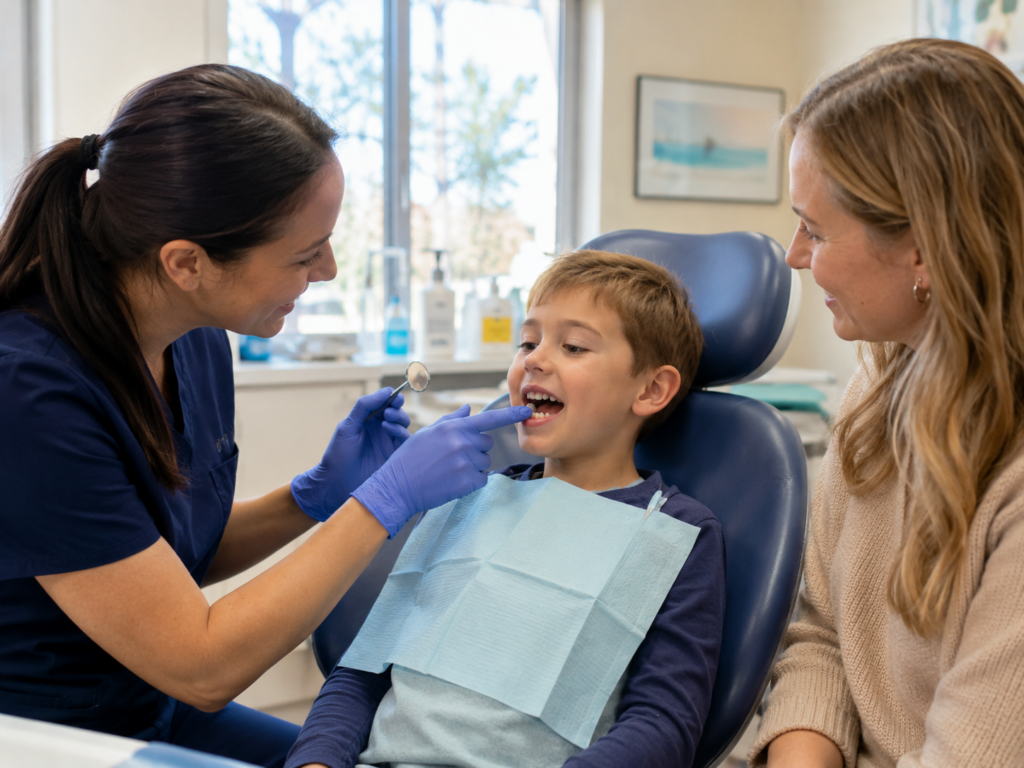
Pediatric dental exams allow the dentist to evaluate the area in the context of your child’s overall dental development.
What Will the Pediatric Dentist Look For?
A pediatric dentist will usually look at more than the new permanent tooth itself.
The evaluation may include:
- How loose the baby tooth is
- How much of the permanent tooth has erupted
- The direction of eruption
- Available space
- Neighboring tooth position
- Your child’s overall stage of dental development
- Whether the area is affecting comfort, hygiene, or function
The findings help the dentist determine whether continued observation is reasonable or whether treatment may be beneficial.
The recommendation should reflect your child’s individual development rather than following the same approach for every child.
Does the Baby Tooth Need to Be Removed?
Not necessarily.
Seeing a permanent tooth behind a baby tooth does not automatically mean the baby tooth needs professional removal.
If the baby tooth is already becoming loose and development appears to be progressing appropriately, monitoring may be recommended.
In other situations, tooth extractions may be considered if a retained baby tooth is not loosening as expected or is interfering with the eruption of the permanent tooth.
The decision should be individualized.
A pediatric dentist can evaluate the developing teeth and explain why monitoring or treatment is recommended instead of assuming extraction is necessary based only on the appearance of two rows of teeth.
What Happens After the Baby Tooth Falls Out?
Parents often wonder whether the permanent tooth will move forward after the baby tooth is gone.
Losing the baby tooth can create additional room, and your child’s mouth will continue developing. However, the eventual position of the permanent tooth depends on several factors, including:
- Available space
- Direction of eruption
- Neighboring teeth
- Jaw and dental development
- The position of other permanent teeth
For that reason, it is better to monitor development than to expect a specific alignment result.
Regular preventative care gives your child’s dental team opportunities to follow eruption, spacing, and other changes as permanent teeth continue to emerge.
These visits also give parents a chance to ask questions about loose teeth, brushing around newly erupting teeth, spacing, bite changes, and other developmental concerns.
Monitoring does not mean every unusual-looking eruption pattern requires treatment. It simply helps the dental team follow your child’s changing smile and recommend care when appropriate.
Helping Your Child Feel Comfortable About Their Changing Smile
Children may also feel curious or concerned when they notice what looks like an extra tooth.
Parents can explain that their grown-up teeth are beginning to arrive and that the dentist can check how everything is developing.
Avoid telling your child that the baby tooth will definitely need to be pulled before it has been evaluated.
Gateway Little Smiles focuses exclusively on children’s dental care and uses a Tell, Show, Do approach to explain and demonstrate what happens during visits in an age-appropriate way.
Keeping the conversation calm and positive can help your child view these developmental changes as a normal part of growing up rather than something to fear.
Have Your Child’s Developing Smile Evaluated
A permanent tooth growing behind a baby tooth can look unusual, but it does not automatically mean your child has a serious dental problem or needs a tooth removed.
Sometimes the baby tooth needs more time to loosen. In other situations, a pediatric dentist may recommend closer monitoring or treatment based on how the permanent tooth is erupting and how the rest of your child’s smile is developing.
If you have noticed two rows of teeth or have questions about your child’s tooth eruption, contact Gateway Little Smiles to schedule an evaluation.
The pediatric dental team can examine your child’s developing smile, explain what you are seeing, and help you understand the appropriate next step.