

When your child’s permanent teeth begin coming in, you may notice something unexpected. The new teeth can look more yellow or cream-colored than the bright white baby teeth beside them.
For many parents, that raises immediate questions: Is my child brushing well enough? Are the new teeth unhealthy? Is something wrong with the enamel?
In many cases, the difference is completely natural.
Permanent teeth commonly have a warmer shade than baby teeth, and the contrast can be especially noticeable while your child has a mixture of both types of teeth.
Knowing what can be normal and what deserves a closer look can help you feel more confident about your child’s developing smile.
Why Do Permanent Teeth Look More Yellow Than Baby Teeth?
Baby teeth and permanent teeth are not identical in structure or appearance.
Primary teeth typically have a brighter, whiter appearance. Permanent teeth naturally tend to have a warmer or more yellowish shade.
Differences in the enamel and underlying dentin affect how light passes through the tooth, which can make the permanent teeth appear more cream-colored than nearby baby teeth.
The contrast may be especially noticeable when the permanent front teeth first erupt because they are sitting directly beside very white primary teeth.
As more permanent teeth emerge and fewer baby teeth remain, that difference may become less striking.
Does Yellow Mean My Child Is Not Brushing Well Enough?
Not necessarily.
If several newly erupted permanent teeth have a similar cream or slightly yellow tone, their natural color may be responsible rather than inadequate brushing.
However, oral hygiene still affects how teeth look.
Plaque and other surface buildup can change the appearance of the enamel, and certain foods or drinks may contribute to surface staining.
Parents can help by encouraging consistent brushing and supervising technique when needed.
Regular pediatric dental cleanings can also help remove buildup that routine brushing may miss while giving the dental team an opportunity to monitor newly erupted teeth.
The goal is not to make every permanent tooth look as white as a baby tooth. It is to keep the teeth clean and healthy while understanding your child’s natural tooth color.
What If Only One Permanent Tooth Looks Yellow or Dark?
A generally warmer shade across several new permanent teeth is different from a noticeable color change affecting only one tooth.
If one tooth appears substantially darker, yellower, gray, brown, or otherwise different from the surrounding teeth, it is worth having it evaluated.
A pediatric dentist may consider:
- Whether the discoloration is on the surface or appears to be within the tooth
- Whether the tooth or surrounding area has experienced previous trauma
- How the enamel developed
- Whether plaque or staining is contributing
- Whether there are other visible or clinical changes
A color difference does not automatically mean something serious is wrong.
An evaluation can help determine why that particular tooth looks different rather than relying on appearance alone.
Can an Earlier Injury Affect the Color of a Permanent Tooth?
Children are active, and falls or bumps involving the mouth can happen.
An injury involving a baby tooth can sometimes affect the developing permanent tooth beneath it, depending on the child’s age, the location of the injury, and other individual factors.
A permanent tooth can also experience trauma after it erupts.
If one tooth looks different and your child has a history of injury in that area, mention it to the pediatric dentist.
That history may provide useful context during the examination.
Not every injured tooth develops discoloration, and tooth color alone does not identify exactly what happened. The dentist needs to evaluate the tooth along with the child’s dental history and other findings.
What About White, Yellow, or Brown Patches?
Natural permanent-tooth color is different from distinct spots, patches, or irregular areas of enamel.
Some children may have permanent teeth with areas that appear:
- Brighter white than the surrounding enamel
- Yellow or cream-colored
- Brown
- Mottled or uneven
- Different in texture
There are several possible explanations for these changes, and parents should not be expected to determine the cause at home.
Pediatric dental exams allow the dental team to evaluate the enamel, examine the health of the tooth, and determine whether the area simply needs monitoring or whether preventive guidance or treatment should be considered.
Should I Try Whitening My Child’s Yellow Permanent Teeth?
Seeing a color difference does not automatically mean your child’s teeth need whitening.
If the permanent teeth simply have their natural warmer shade, cosmetic treatment may not be necessary.
Parents should not start whitening products simply because newly erupted permanent teeth look yellower than baby teeth.
Tooth-color concerns should first be discussed with a pediatric dentist, especially while a child still has a mixture of baby and permanent teeth.
If the color appears unusual, it is also important to understand why the tooth looks different before trying to change its appearance.
The priority is making sure your child’s teeth are healthy and developing appropriately.
How Can Parents Help Keep Permanent Teeth Healthy?
As permanent teeth begin emerging, children are entering an important stage of oral development.
Parents can support healthy habits by encouraging:
- Consistent brushing
- Age-appropriate supervision when needed
- Cleaning all surfaces of newly erupted teeth
- Regular dental visits
- Following personalized preventive recommendations from the dental team
Regular visits are an important part of preventive pediatric dentistry.
These appointments allow the dental team to monitor newly erupted teeth, identify changes that deserve attention, provide oral hygiene guidance, and help children become more comfortable taking responsibility for their own dental care as they grow.
How Does a Pediatric Dentist Evaluate Tooth Color?
When a parent asks about a tooth that looks different, the goal is not simply to decide whether the tooth is “white enough.”
A pediatric dentist looks at the tooth in the context of the child’s overall developing smile.
Depending on the concern, the evaluation may include:
- Which teeth are affected
- Whether the color difference is uniform or localized
- The appearance and condition of the enamel
- Oral hygiene and surface buildup
- Dental or injury history
- Changes affecting the tooth or surrounding tissues
- Any accompanying symptoms
This individualized approach can help distinguish a normal developmental color difference from a change that may need monitoring or additional care.
Helping Children Feel Comfortable During Dental Evaluations
Children may become nervous when they hear adults discussing something unusual about their teeth.
Parents can help by keeping the conversation calm and avoiding language that makes the color difference sound frightening or abnormal before it has been evaluated.
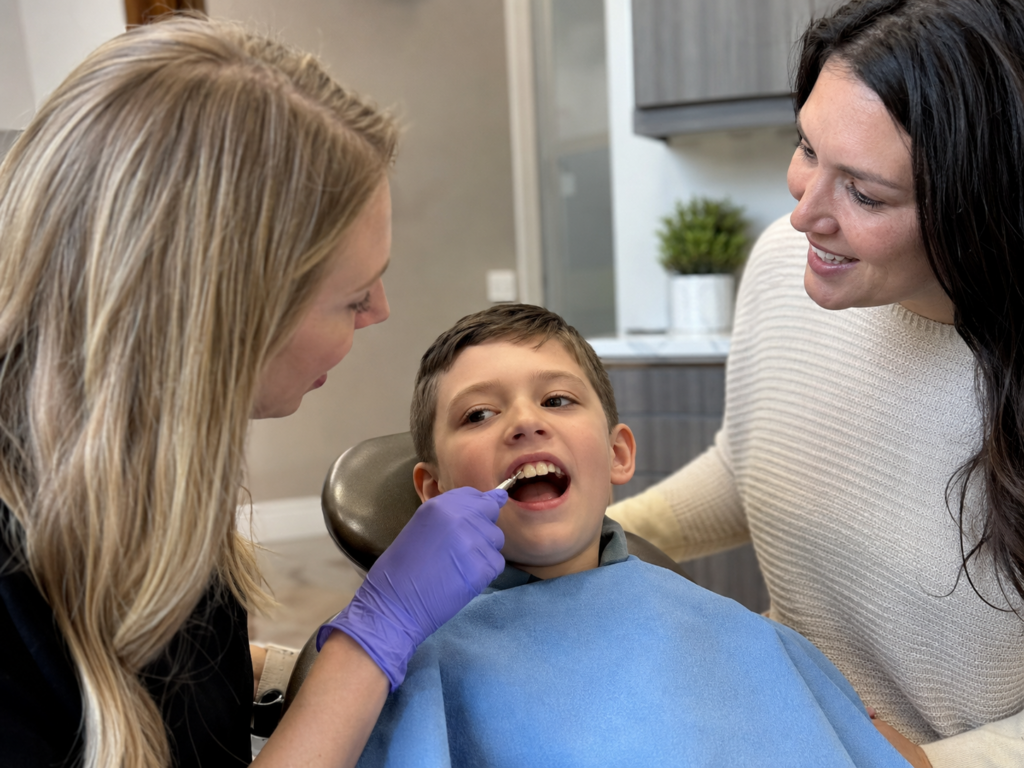
Gateway Little Smiles uses a Tell, Show, Do approach to help children understand their care. The team explains what will happen in child-friendly terms, shows the child what to expect when appropriate, and then proceeds with the examination or treatment.
The goal is to help children feel involved and supported while giving parents clear information about their child’s oral health.
When Should I Ask a Pediatric Dentist About Yellow Teeth?
If your child’s newly erupted permanent teeth are simply a little warmer than the baby teeth around them, you can mention the difference at a regular dental appointment if you have questions.
An earlier evaluation may be helpful when:
- One tooth looks substantially different from neighboring teeth
- A tooth begins changing color
- You notice distinct white, yellow, or brown patches
- The enamel has an unusual appearance or texture
- Your child previously injured the tooth or surrounding area
- Discoloration occurs with pain, swelling, sensitivity, or another dental concern
Parents do not need to determine the cause themselves.
A pediatric dentist can evaluate whether the appearance is consistent with normal development or whether closer monitoring or treatment should be considered.
A Warmer Tooth Color Can Be Part of a Healthy Growing Smile
Seeing yellow permanent teeth in children can be surprising, especially when those teeth first appear next to bright white baby teeth.
Fortunately, a slightly warmer or cream-colored shade can be a normal characteristic of permanent teeth rather than a sign that your child is not brushing well or has unhealthy teeth.
At the same time, changes affecting one tooth, distinct patches, or a noticeable change in color deserve individualized attention rather than assumptions.
Gateway Little Smiles provides pediatric dentistry focused on prevention, parent education, personalized care, and positive dental experiences.
If you have questions about your child’s tooth color or developing smile, contact Gateway Little Smiles to schedule an evaluation and get guidance specific to your child.